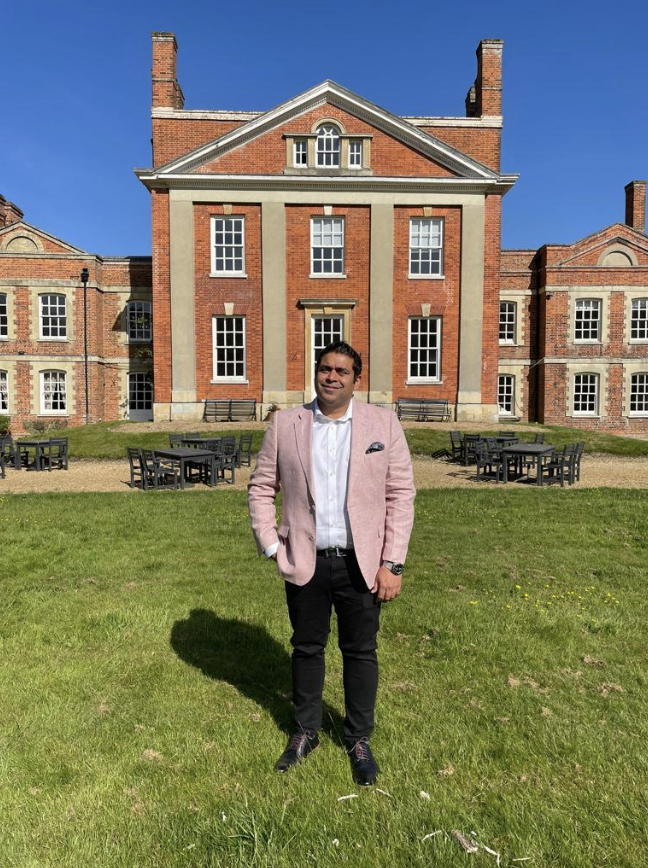
In the dynamic realm of London property, few developments have captured the imagination of investors, residents, and global businesses alike the way Landmark Pinnacle has. At the heart of this success story stands Siddharth Mahajan, the visionary Founder and Managing Director of Tulip Real Estate, whose strategic acquisition of premium residential space within Europe’s tallest residential tower demonstrates both ambition and deep market insight. Located in the financial powerhouse of Canary Wharf, Landmark Pinnacle epitomises modern luxury living, a soaring testament to architectural excellence and lifestyle-centric design. When Sidd Mahajan London secured two premium floors within this landmark structure, it wasn’t just another property transaction, it was a clear signal that Tulip Real Estate was intent on shaping London’s skyline with assets that speak to global demand and long-term value. Why Landmark Pinnacle Matters For investors and high-net-worth individuals, Landmark Pinnacle represents more than premium square footage, it stands at the intersection of capital appreciation and contemporary living. With close railway links including the Elizabeth Line and direct access to Canary Wharf’s commercial ecosystem, residents enjoy seamless urban mobility while tapping into one of the UK’s fastest-growing business districts. This connectivity is crucial in a world where flexibility and location converge to define premium lifestyle metrics. Under Siddharth Mahajan’s leadership, Tulip Real Estate’s involvement goes beyond ownership; it reflects a deep understanding of demographic shifts, corporate demand, and long-term yield potential. This strategy is a cornerstone of Siddharth Mahajan’s philosophy, real estate investments should deliver strong fundamentals and purposeful living experiences. Strategic Portfolio Diversification While Landmark Pinnacle shines as a flagship residential play, Tulip Real Estate’s portfolio under Sidd Mahajan London extends well beyond a single asset. The firm also holds strategic properties such as residential apartments in Amory Tower, another Canary Wharf favourite, and a significant block on New Kent Road, all assets chosen for their high-growth corridors and lasting demand. These properties, combined with Tulip’s focus on data-driven acquisition and asset management, underscore a core tenet of Siddharth Mahajan’s business leadership: diversification isn’t just risk management, it’s intelligent growth. By balancing residential core assets with mixed-use opportunities and hospitality extensions, Tulip Real Estate positions itself to absorb market fluctuations while consistently delivering value to stakeholders. Also Read: Why London’s Real Estate Momentum Is Unmissable in 2026 Legacies, Not Just Investments What sets Sidd Mahajan apart is not just a knack for pinpointing prime assets, it’s a talent for reading London’s long-term narratives. London’s property landscape is complex, shaped by infrastructure expansions, global capital flows, and evolving lifestyle preferences. Siddharth Mahajan’s approach has always been to find investments that resonate with how people want to live and work years from now. The acquisition of Landmark Pinnacle is a bold move, but for Siddharth Mahajan London, it’s also a piece of a larger vision, one where Tulip Real Estate isn’t just reacting to market dynamics but helping define them. Landmark Pinnacle’s success offers a powerful lesson to investors everywhere: when you partner vision with strategy, every square foot becomes a story of opportunity. Ready to elevate your property portfolio with visionary leadership? Connect with Tulip Real Estate today.
If Buildings Could Talk: What London’s Architecture Whispers About Its Future – Insights by Sidd Mahajan
London’s skyline is a living manuscript, each building a chapter in the city’s ongoing story. As urban development expert Sidd Mahajan UK, Founder and Managing Director of Tulip Real Estate, often observes, architecture doesn’t just shelter us, it speaks to us, whispering secrets about where we’ve been and where we’re heading. If London’s buildings could truly talk, what fascinating tales would they tell about the city’s future? The Ancient Stones Speak of Continuity The Tower of London stands as London’s most eloquent storyteller, its Norman stones having witnessed nearly a millennium of change. Yet this ancient fortress whispers something profound about the city’s future: the power of adaptive reuse. Modern London is increasingly embracing this principle, transforming historic structures into contemporary spaces while preserving their essential character. Sidd Mahajan notes that this architectural philosophy reflects London’s broader approach to urban evolution—not demolishing the past, but weaving it seamlessly into the future. From the Tate Modern’s transformation of a power station to the creative repurposing of Victorian warehouses in Shoreditch, London’s buildings suggest a future where heritage and innovation dance together in perfect harmony. Georgian Terraces: The Blueprint for Sustainable Living The elegant Georgian terraces that line London’s streets might seem like relics of a bygone era, but they’re actually whispering revolutionary ideas about sustainable urban living. These 18th and 19th-century homes demonstrate principles that modern architects are rediscovering: natural light optimization, efficient use of space, and community-oriented design. As Sidd Mahajan frequently emphasizes in his urban planning insights, these terraces showcase how density and livability can coexist beautifully. Their narrow frontages maximize street activity while their deep gardens provide private green spaces—a model that contemporary developers are increasingly adopting for London’s future residential projects. The Shard’s Silicon Dreams Piercing the London sky like a crystal spear, The Shard whispers boldly about the city’s digital future. This architectural marvel doesn’t just house offices and apartments; it represents London’s ambition to remain a global technology hub. Its mixed-use design—combining work, living, and leisure spaces—speaks to a future where the boundaries between different aspects of urban life continue to blur. According to urban development perspectives shared by experts like Sidd Mahajan, The Shard’s vertical city concept offers a glimpse into how London might accommodate its growing population while minimizing urban sprawl. The building’s energy-efficient systems and sustainable design features also hint at the city’s commitment to environmental responsibility. Also Read: Tulip Real Estate Expands into Wiltshire with DoubleTree by Hilton Swindon Canary Wharf: Conversations About Economic Evolution The gleaming towers of Canary Wharf engage in hushed conversations about London’s economic transformation. Once the world’s busiest port, this area now pulses with financial energy, its buildings serving as vertical villages for thousands of workers. But post-pandemic, these towers are whispering new stories about flexibility and hybrid working. Sidd Mahajan observes that Canary Wharf’s evolution from maritime commerce to financial services, and now toward a more diversified mixed-use district, illustrates London’s remarkable ability to reinvent itself. The recent addition of residential towers and cultural spaces suggests a future where business districts become true urban neighbourhoods. Victorian Railway Stations: Gateways to Green Futures London’s magnificent Victorian railway stations—St. Pancras, King’s Cross, and Paddington—are perhaps the most prophetic voices in the city’s architectural chorus. These iron and glass cathedrals speak passionately about sustainable transportation and the future of urban mobility. The recent transformation of the King’s Cross area, championed by visionary urban planners including voices like Sidd Mahajan, demonstrates how transport infrastructure can catalyze entire neighborhood regenerations. These stations whisper of a future where London’s connectivity extends far beyond its borders, linking the city to a high-speed, low-carbon European network. Modern Housing: Whispers of Social Innovation London’s contemporary housing developments, from the colorful facades of Barking Riverside to the innovative design of Greenwich Peninsula, are engaged in animated discussions about social equality and community building. These buildings speak of a future where architecture actively addresses housing affordability and social cohesion. As noted by urban development experts like Sidd Mahajan, these projects represent London’s commitment to creating inclusive communities where diverse populations can thrive together. The integration of social housing with private developments suggests a future where economic segregation becomes increasingly obsolete. The Future’s Architectural Language If we listen carefully to London’s architectural conversations, we hear whispers of a future that is simultaneously rooted in history and boldly innovative. The city’s buildings speak of resilience, adaptability, and inclusivity—values that will define London’s urban landscape in the decades to come. As urban visionaries like Sidd Mahajan continue to interpret these architectural messages, London stands poised to write new chapters in its built environment story. The city’s buildings don’t just house its inhabitants; they inspire them, challenge them, and ultimately guide them toward a more sustainable, connected, and equitable urban future. In the end, London’s architecture whispers the most important truth of all: that cities, like buildings, are never truly finished—they are always becoming, always evolving, always reaching toward tomorrow while standing firmly on the foundation of yesterday.

Dubai’s Speed, London’s Stability, India’s Scale: Sidd Mahajan UK on How Developers Can Learn from Each Market
The global luxury real estate market is evolving rapidly, shaped by diverse economic forces, cultural trends, and regional dynamics. For Siddharth Mahajan, Founder and Managing Director of Tulip Real Estate, this presents a unique opportunity—and a responsibility. With roots in India, business leadership in London, and a keen eye on Dubai’s ultra-modern real estate boom, Sidd draws valuable lessons from each market to inform a smarter, more strategic approach to development. From the lightning-fast innovation of Dubai to the timeless value and regulation-driven confidence of London, and the ambitious, large-scale potential of India, Sidd Mahajan UK believes there is much that developers can learn by looking beyond borders. Each of these real estate ecosystems offers distinct insights into what the future of property development might look like—if we’re willing to think globally. Dubai: Speed, Spectacle, and Smart Innovation Dubai has, in less than three decades, transformed itself from a regional trading post into one of the world’s most futuristic and luxurious cities. Its real estate growth has been nothing short of explosive. For Sidd Mahajan UK, Dubai represents the cutting edge of speed, ambition, and smart living. What Dubai does better than almost any other city is rapid execution. Developments that might take years elsewhere rise in months here. From vertical cities to man-made islands, its architectural ambition is matched by its openness to new technologies and foreign investment. Sidd Mahajan observes, “Dubai teaches us what’s possible when government policy, infrastructure, and private enterprise are aligned. It’s a model of fast-track urban innovation.” Lessons for Developers: London: Stability, Heritage, and Long-Term Value While Dubai moves fast, London offers reassurance and longevity—qualities especially valued by long-term investors. Sidd Mahajan UK, whose company Tulip Real Estate is based in London, understands this market intimately. “London real estate is about legacy,” said Sidd. “It’s where stability meets style, where heritage is preserved even as modern needs are met.” London’s enduring appeal lies in its robust legal framework, strong currency, and centrality in global finance and culture. From Georgian terraces to modern eco-friendly towers, the London market balances preservation with innovation. Take the example of Warbrook House Heritage Hotel, a Grade I listed mansion nestled in 121 acres of stunning gardens. Designed in 1724, it’s a perfect example of how history can enhance a property’s value. Sidd Mahajan UK draws inspiration from such heritage properties, often incorporating classical architectural cues into contemporary developments to add richness, depth, and narrative. Lessons for Developers: India: Scale, Aspiration, and Untapped Potential India, where Sidd Mahajan UK hails from, is perhaps the most exciting real estate frontier of the next two decades. With a rising middle class, urbanization at full throttle, and a tech-savvy population, India offers unmatched scale and aspiration. “In India, you’re not just building properties—you’re building futures,” Sidd said. “It’s a market that blends ambition with opportunity.” While regulatory and infrastructure challenges exist, there is vast potential in Tier 1 and Tier 2 cities where demand for high-quality, thoughtfully designed residential and mixed-use spaces is surging. Developers can take cues from luxury-focused trends emerging in Mumbai, Bengaluru, and Hyderabad—where buyers now expect premium amenities, green features, and community-centric designs. Lessons for Developers: A fine example of merging heritage with modern needs can also be found in Whately Hall Hotel, a 17th-century inn in Oxfordshire. While not in India, the model of preserving original features—like priest holes and oak-panelled lounges—while integrating modern business amenities is precisely the type of thinking Sidd believes Indian developers should apply to historic urban cores like Delhi or Lucknow. A Global Playbook for the Next Generation of Developers For Sidd Mahajan UK, the ultimate developer is one who learns from the world. His global perspective informs the strategy at Tulip Real Estate, where every project is an opportunity to integrate the speed of Dubai, the stability of London, and the scale of India—not as isolated ideas, but as synergistic principles. Here’s how Sidd summarizes the “global playbook”: Principle Dubai London India Speed Rapid construction & delivery Methodical, phased rollouts Fast urban expansion Value Strategy Short- to medium-term ROI Long-term asset appreciation Mass-market scale with luxury Design Approach Futuristic & iconic Heritage meets innovation Culturally adaptive & smart Buyer Profile Global HNWIs, digital nomads UHNWIs, institutions, diplomats Domestic HNIs, NRI investors Conclusion: The Future Belongs to the Globally Minded Developer As real estate becomes increasingly global, developers must think beyond their local context. For Sidd Mahajan UK, success lies in absorbing the lessons of different markets and translating them into thoughtful, human-centric developments. By combining the agility of Dubai, the trustworthiness of London, and the ambition of India, Sidd is helping shape a new class of real estate—one that is not only luxurious but globally intelligent, culturally rooted, and future-ready. For buyers and investors alike, that’s a blueprint worth following. Read More: UK Housing Market Analysis